

By Daniel Okafor · Senior Editor
Published
Answer in brief
If standard insurers deny your auto insurance application following a DUI conviction, you still have viable paths to legal coverage. Every state mandates financial responsibility, and drivers refused by standard companies can turn to non-standard insurers or state assigned-risk plans to secure required coverage and reinstate driving privileges.
Why Insurers Deny Coverage After an Impaired-Driving Conviction
Receiving an auto insurance denial can feel alarming, especially when your ability to regain driving privileges hinges on providing immediate proof of financial responsibility. Auto insurers rely on sophisticated underwriting algorithms to assess loss probability. Under basic rating principles, an impaired-driving conviction represents a severe underwriting flag that signals an elevated probability of future claims. Major rating factors include driving record, location, annual mileage, and coverage choices. When an applicant falls outside a standard company's risk tolerance guidelines, underwriting rules instruct the insurer to decline the application or refuse to issue an SR-22 filing.
Understanding the Three Auto Insurance Market Tiers
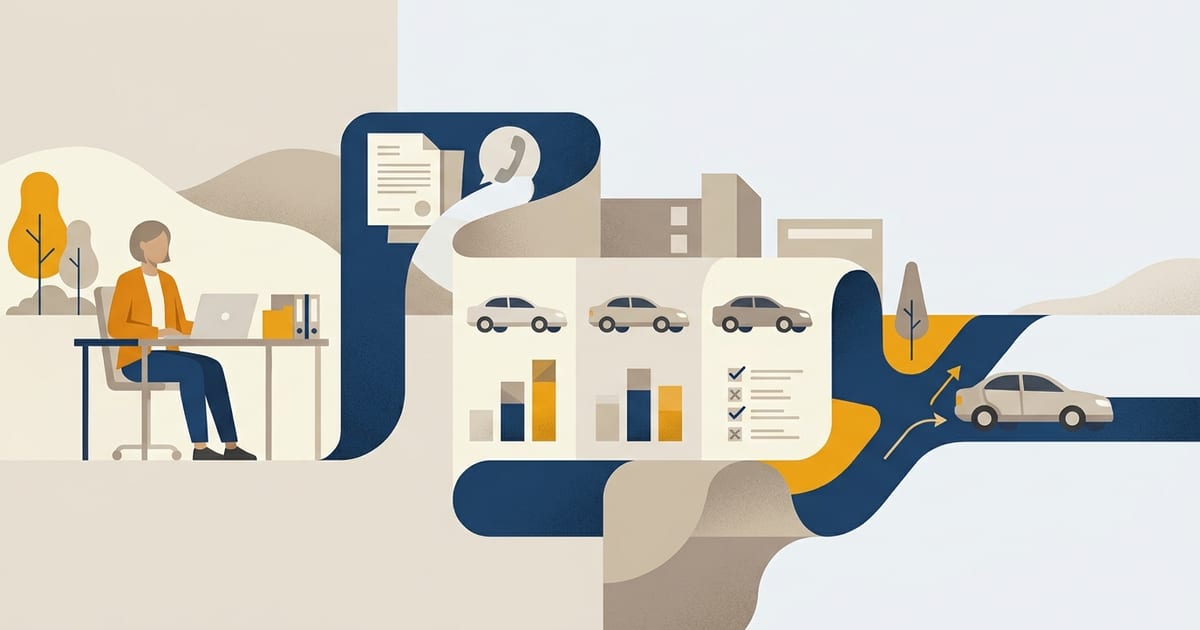
The auto insurance industry is structured into three distinct operating segments: standard, non-standard, and residual markets. Standard and preferred carriers insure motorists with clean records or minor infractions. When a driver receives a conviction for driving under the influence, standard insurers often issue an outright declination or choose nonrenewal at policy expiration. Drivers must then seek coverage through non-standard insurance carriers. These companies write policies specifically for high-risk drivers, factoring past infractions into adjusted premium rates. Finally, if repeated attempts to secure voluntary coverage fail, the statutory residual market provides a guaranteed access route.
Four Actionable Steps to Take After an Insurance Denial
- 1
1. Confirm Exact Certification Requirements
Contact your state licensing agency or review court disposition paperwork to confirm whether you require an SR-22 certificate or higher statutory liability limits before submitting new applications.
- 2
2. Broaden Your Search to the Non-Standard Market
Rather than reapplying with traditional standard insurers, focus your shopping on non-standard carriers and independent brokers who work with companies that specialize in underwriting high-risk motorists.
- 3
3. Disclose Your Driving History Transparently
Underwriters pull motor vehicle reports during the binding process. Omitting a conviction leads to swift rejection or policy cancellation, whereas upfront disclosure allows accurate pricing and prevents coverage lapses.
- 4
4. Apply to Your State's Assigned-Risk Plan if Necessary
If you cannot secure a policy after documented rejections in the voluntary market, an authorized insurance agent can submit an application directly to your state's assigned-risk auto insurance plan.
How State Assigned-Risk Plans Function as a Safety Net
State assigned-risk plans—established under state insurance statutes and monitored by state insurance regulators—exist to ensure that every driver required to carry financial responsibility can obtain legal coverage. When you apply through the residual market, the state plan assigns your application to a private auto insurer authorized to do business in the state. The assigned insurer cannot reject your application based on driving record alone, provided you submit a complete application, possess an active or reinstatable licence, and pay the required deposit premium. While assigned-risk policies typically carry higher premiums and offer only state minimum liability coverage, they fulfill statutory reinstatement requirements.
Strategies to Lower Costs Once You Secure Coverage
Securing coverage after an insurance declination often entails higher initial rates, but practical adjustments can mitigate overall costs. Regulators recommend obtaining multiple quotes to compare how different underwriting models treat past violations. Policyholders can manage costs by increasing comprehensive and collision deductibles, dropping physical damage coverage on older vehicles, and eliminating unnecessary optional riders. Enrolling in defensive driving courses and paying annual or semi-annual premiums in full can also unlock meaningful discounts. As convictions age past state lookback periods, shopping your policy annually allows you to transition gradually back to standard market rates.
Questions & answers
Can an insurance company deny me coverage solely because of a DUI?
Yes. In the voluntary insurance market, private carriers establish underwriting guidelines based on driving records, claims history, and risk assessment. Many standard insurers decline to issue policies to applicants with an impaired-driving conviction or an active SR-22 filing requirement.
What is an assigned-risk auto insurance plan?
An assigned-risk plan—also called a residual market mechanism or shared market—is a state-mandated programme that guarantees access to basic liability insurance for drivers unable to obtain coverage in the voluntary market. The state assigns high-risk motorists across licensed insurers in proportion to each carrier's market share.
Will my insurance rates always remain in the high-risk bracket?
No. Convictions and surcharges carry defined lookback periods, typically lasting three to five years depending on the state and insurer underwriting rules. Maintaining a clean driving record and continuous coverage allows you to transition back to standard coverage over time.
Does a denial from one insurance carrier mean all carriers will decline me?
No. Underwriting standards vary substantially among carriers. While preferred and standard insurers often decline applicants with recent major violations, non-standard insurers specialise specifically in insuring drivers with impaired-driving convictions or filing mandates.
Terms: High-risk driver, Non-standard insurance, Financial responsibility, SR-22
Sources and references
Legal figures on this page (minimum limits, filing periods, statutory benefits) are checked against the primary law or the state insurance regulator listed below. Links and figures last verified Nov 2026.
- Alcohol and drugs — Insurance Institute for Highway SafetyIndependent researchImpaired-driving crash risk, BAC laws and ignition-interlock effectiveness.
- Facts + Statistics: Alcohol-impaired driving — Insurance Information InstituteStatistical dataAlcohol-impaired crash fatalities, BAC thresholds and state ignition-interlock context.
- What if I can't find auto coverage? — Insurance Information InstituteConsumer guidanceHow the non-standard market and state assigned-risk plans insure drivers the voluntary market declines.
- Is it legal to drive without insurance? — Insurance Information InstituteConsumer guidanceEvery state requires drivers to demonstrate financial responsibility; in most states insurance is the mandatory way to do so.
- Consumer insurance information — National Association of Insurance CommissionersConsumer guidancePlain-language guides from the body of state insurance regulators; links to every state's insurance department and complaint process.
- Nine ways to lower your auto insurance costs — Insurance Information InstituteConsumer guidanceShop at least three quotes; raising a deductible from $200 to $500 can cut collision/comprehensive cost 15–30%, $1,000 can save 40%+; drop physical damage on cars worth under 10× the premium; bundling, low-mileage and good-student discounts.
- What determines the price of an auto insurance policy? — Insurance Information InstituteConsumer guidanceRating factors: driving record, mileage, location, age, gender, vehicle, credit-based insurance score, coverage choices. Notes ZIP-code rating is prohibited in California and Michigan and gender rating is prohibited in seven states.
- Responsibility.org — Foundation for Advancing Alcohol ResponsibilityConsumer guidanceImpaired-driving data and prevention programmes; state DUI law summaries.
Practical guidance on this page is original editorial work. Cited sources support factual statements and do not endorse this site. Dollar ranges described as typical or illustrative are editorial estimates, not figures from these sources.