
Guide
Non-Owner Car Insurance After a DUI
How a non-owner policy satisfies an SR-22 or FR-44 requirement when you do not own a car, what it covers, what it costs and when it is the wrong choice.

By Daniel Okafor · Senior Editor
Published · Updated
Answer in brief
A non-owner car insurance policy provides liability coverage when you drive vehicles you do not own, and it can carry an SR-22 or FR-44 filing. It is the standard answer for a driver who has a filing requirement but no car—because the car was sold, the licence is suspended, or they rely on borrowed and rented vehicles. It is cheaper than an owner policy, does not cover damage to the car you are driving, and is the wrong choice if you have regular access to a household vehicle.
What a non-owner policy covers
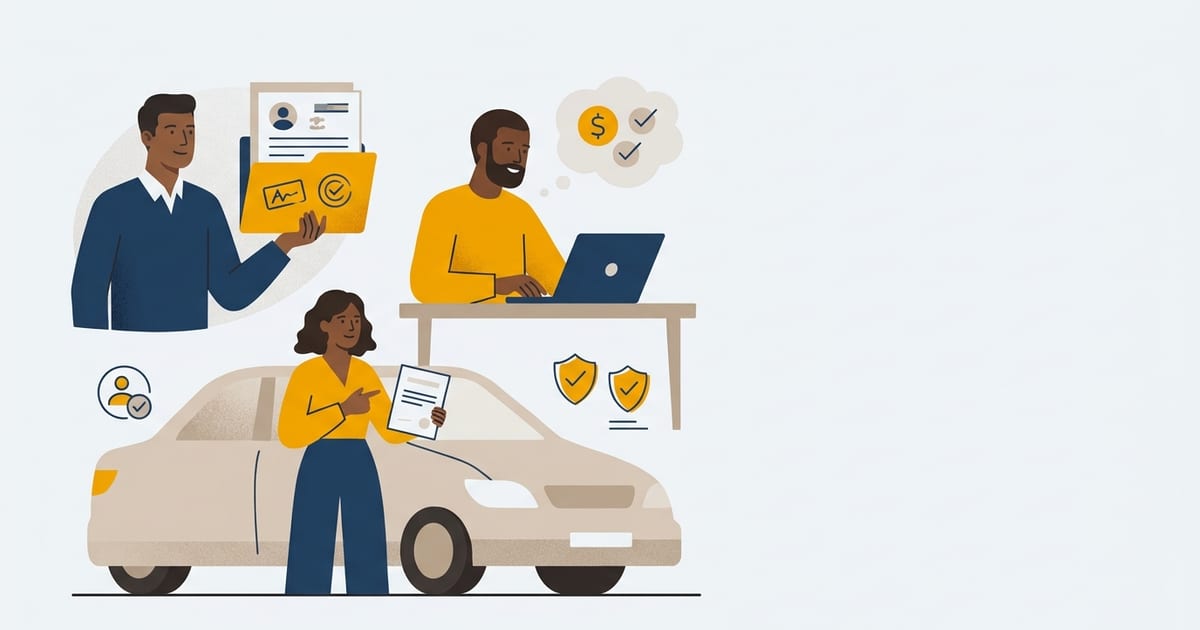
A non-owner policy is liability-only coverage that follows you, the driver, rather than a vehicle. If you borrow a friend's car or rent one and cause an accident, it pays for the other party's injuries and property damage up to your limits, typically after the vehicle owner's own policy if there is one. Depending on the state and insurer it can also include uninsured motorist coverage and medical payments or personal injury protection. It does not include collision or comprehensive, because there is no car of yours to insure.
Crucially for a driver after a DUI, a non-owner policy is a real liability policy, so an insurer can attach an SR-22 or FR-44 to it. The state does not care whether the policy covers a specific car; it cares that you have liability coverage and that it will be told if it lapses.
When a non-owner policy is the right choice
- You sold or lost your car after the conviction but have a filing requirement to satisfy.
- Your licence is suspended and you want to keep continuous coverage so you do not add a lapse to your record.
- You will be driving borrowed or rented cars occasionally and need coverage that follows you.
- You want to keep the filing period running while you are not driving at all—most states will not count time without a filing in place.
When it is the wrong choice
Insurers write non-owner policies on the assumption that you do not have regular access to a vehicle. If you live with someone whose car you drive routinely, most insurers will not issue a non-owner policy, or will exclude that vehicle. In that case you need to be listed on the household policy (which will be re-rated for your conviction) or carry your own owner policy on a car titled to you. Misrepresenting your access to a vehicle to get the cheaper policy is the kind of error that leads to a denied claim.
What it costs
Non-owner policies are usually meaningfully cheaper than owner policies at the same limits, because there is no physical-damage coverage and the expected mileage is low. A DUI still places you in the high-risk tier, so the premium is higher than a clean-record driver would pay for the same non-owner policy. Fewer insurers write non-owner policies than owner policies, and fewer still write them with filings, so the comparison set is smaller—which makes it more important to ask every candidate the two gating questions up front: do you write non-owner policies and do you file SR-22s.
Quote finder
Find auto insurance quotes that fit your situation
Buying one
- 1
Confirm you qualify
No vehicle titled to you and no regular access to a household car.
- 2
Decide limits
The filing requires the state minimum (or FR-44 limits in Florida and Virginia). Consider higher limits; the price difference on a non-owner policy is usually modest.
- 3
Ask for the filing at quote time
The insurer must send the SR-22/FR-44 electronically to your state. Get confirmation.
- 4
Switch to an owner policy when you get a car
The non-owner policy will not cover a car you own. Move the filing to the new policy with no gap.
Entries in this guide
Specific questions answered in more depth.
Questions & answers
Can I get a non-owner SR-22 if my licence is suspended?
In most states yes; insurers issue non-owner policies to drivers with suspended licences specifically so the filing can be in place for reinstatement. Some insurers require a valid or soon-to-be-reinstated licence; ask.
Does a non-owner policy cover a rental car?
It provides liability coverage when you drive a rental, but not damage to the rental itself. Rental counters sell a damage waiver for that.
Is a non-owner policy cheaper than adding me to a family policy?
Often, but if you drive the family car regularly you will not qualify for a non-owner policy. Compare both honestly.
Terms used in this guide
- Non-owner policy
- A liability policy that covers you when driving vehicles you do not own. It can carry an SR-22 or FR-44 filing and is the usual way to satisfy a filing requirement without a car.
- SR-22
- A certificate of financial responsibility that an insurer files with a state to prove a driver carries at least the minimum required liability coverage. Required after a DUI in most states, usually for three years.
- Liability coverage
- Insurance that pays for injuries and property damage you cause to others. Expressed as three limits—bodily injury per person, bodily injury per accident, property damage—such as 25/50/25 (in thousands of dollars).
- Financial responsibility
- The legal requirement to be able to pay for damage you cause while driving, satisfied in practice by carrying liability insurance at or above state minimums. SR-22 and FR-44 filings are proof of financial responsibility.
Sources and references
Legal figures on this page (minimum limits, filing periods, statutory benefits) are checked against the primary law or the state insurance regulator listed below. Links and figures last verified Nov 2026.
- Alcohol and drugs — Insurance Institute for Highway SafetyIndependent researchImpaired-driving crash risk, BAC laws and ignition-interlock effectiveness.
- Automobile financial responsibility limits by state — Insurance Information Institute (2023)Statistical dataCompulsory coverages and minimum liability limits by state (table dated December 2023 — several states have raised limits since; see statute entries).
- Facts + Statistics: Alcohol-impaired driving — Insurance Information InstituteStatistical dataAlcohol-impaired crash fatalities, BAC thresholds and state ignition-interlock context.
- What is covered by a basic auto insurance policy? — Insurance Information InstituteConsumer guidanceDefines bodily injury and property damage liability, MedPay, PIP, uninsured/underinsured motorist, collision, comprehensive and glass coverage.
- Buying tips — United PolicyholdersConsumer guidanceNon-profit guidance on choosing coverage, deductibles and limits, and on handling claims.
- What if I can't find auto coverage? — Insurance Information InstituteConsumer guidanceHow the non-standard market and state assigned-risk plans insure drivers the voluntary market declines.
- Is it legal to drive without insurance? — Insurance Information InstituteConsumer guidanceEvery state requires drivers to demonstrate financial responsibility; in most states insurance is the mandatory way to do so.
- Responsibility.org — Foundation for Advancing Alcohol ResponsibilityConsumer guidanceImpaired-driving data and prevention programmes; state DUI law summaries.
Practical guidance on this page is original editorial work. Cited sources support factual statements and do not endorse this site. Dollar ranges described as typical or illustrative are editorial estimates, not figures from these sources.
Guide
SR-22 Insurance After a DUI
What an SR-22 is, how it differs from an FR-44, how long you need it, what it costs, and how to get one filed quickly after a DUI.
Guide
What Car Insurance Coverage to Buy After a DUI
Liability limits, collision and comprehensive, uninsured motorist and medical coverage after a DUI: what a filing requires, what you should actually carry, and where to save without exposing yourself.
Guide
DUI Car Insurance Rules by State
Which states require an SR-22 or FR-44 after a DUI, how long the filing lasts, which states have no filing requirement, and where lookback periods are longest.